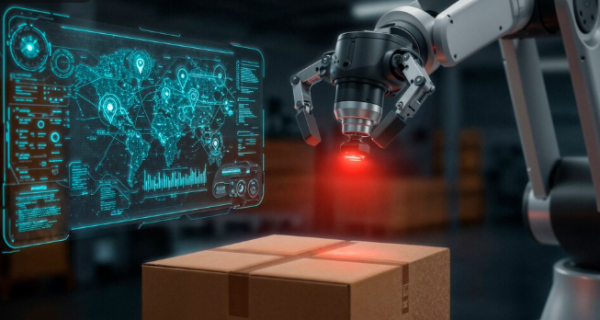
The evolution of artificial intelligence has permanently altered the digital battleground. No longer just a tool for efficiency, AI has become the primary weapon for sophisticated threat actors. As cybercriminals leverage generative models to bypass traditional defenses, organizations are realizing that human-speed responses are insufficient. To combat algorithms, you need algorithms. This paradigm shift—AI fighting AI—is defining the next generation of digital resilience. Navigating this landscape requires a proactive approach and a trusted partner. STL Digital understands that surviving this new era means transitioning to autonomous, predictive models. The foundation of modern protection lies in comprehensive Cyber Security Services that integrate with your infrastructure, ensuring your organization can neutralize threats at machine speed.
The Dawn of Offensive AI
Cybercrime has become more accessible due to the commercialization of generative AI. In the past, it took a lot of time and extensive technical knowledge to launch a sophisticated attack. Entry barriers have drastically decreased today. Large language models are used by threat actors to automate the production of polymorphic malware, which is malicious code that modifies its structure to avoid detection systems based on signatures.
The rise in targeted social engineering is one obvious effect of offensive AI. Attackers create highly customized, context-aware phishing emails by feeding generative models with data scraped from business websites. These communications are extremely hard to identify because they don’t exhibit the typical telltale signs of compromise. Organizations can no longer rely on static defenses, as this reality highlights. Defenders must match the machine speed of their opponents.
The Rise of Autonomous Cyber Defense
Autonomous cyber defense is one of the changes that are necessary in the defense of valuable digital assets. Autonomous systems use modern machine learning, rather than just human data sifting through thousands of security alerts every day. Such systems operate on the principle of constant monitoring of large networks, user behavior analysis, and defensive measures against them without the direct involvement of human intervention.
The key to this change lies in the capacity to see the big picture. Traditional Cyber Security Services often operate in rigid silos, generating endless alerts based strictly on predefined rules. The autonomous systems assimilate and match telemetry information over the whole corporate IT ecosystem – such as remote endpoints, internal networks, and complicated identity management systems. These intelligent systems immediately diagnose microscopic network anomalies by establishing the correct baseline of normal behavior, which may be a sign of an ongoing silent breach.
The autonomous system acts instantly when a critical anomaly has been detected. When an employee unexpectedly starts to download terabytes of sensitive data, the AI is able to isolate the compromised endpoint automatically, revoke user access, and stop the exfiltration before it causes much harm. This significantly decreases the average response time of days to seconds. This development is especially essential to the contemporary SOC Services, which have a history of being riddled by alert fatigue. Autonomous AI serves as a type of force multiplier by completely automating initial triage and containment steps, so that human specialists are free to invest in sophisticated threat-hunting and general risk management.
Market Validation: What Global Analysts Predict for 2026
The shift toward AI-driven security is backed by significant movement in global investment and strategic risk assessments. Leading independent research firms highlight 2026 as a pivotal year for Enterprise Security.
- Gartner: The Spending and Infrastructure Baseline Gartner’s 2026 forecast highlights a transition toward a “dynamic and preemptive” defense model. Security software remains the fastest-growing segment, with spending projected to grow 12.4% in 2026 as organizations prioritize cloud and endpoint protection. Furthermore, Gartner warns that the rise of “Agentic AI” (autonomous AI agents) is exposing critical gaps in traditional identity management, causing budgets to pivot toward Identity Threat Detection and Response to govern these new machine actors.
- KPMG: The Executive Priority and ROI Shift KPMG’s research shows that cybersecurity has overtaken all other IT categories as the top spending priority for the C-suite. For 2026, cybersecurity emerged as the primary area for large increases in investment, with 83% of organizations planning budget hikes. Additionally, 91% of executives expect AI to shift from an efficiency tool to a revenue-driving innovation by the end of 2026, necessitating embedded security to ensure operational resilience.
- Forrester: The Risk and Future-Proofing Layer Forrester’s analysis provides a reality check for the industry, identifying specific high-impact risks. They predict that Quantum Security spending will exceed 5% of total IT security budgets in 2026 as firms prepare for “harvest now, decrypt later” threats. Forrester also forecasts the first major public breach caused by Agentic AI in 2026, forcing a move from AI hype to a focus on rigorous governance and AI for Enterprise outcomes.
How Autonomous Systems Transform Operations
The integration of artificial intelligence into defensive strategies is rewriting the operational playbooks of global security teams. In the past, dedicated incident response relied on static documents that dictated procedures for known attacks. These legacy playbooks are dangerously inadequate against modern AI-driven threats that constantly shift tactics during an active intrusion.
To counter this dynamic behavior, the cybersecurity industry is moving toward fully dynamic response mechanisms. Instead of blindly following an outdated script, the defensive artificial intelligence will instantly analyze the unique variables of an incoming attack. It then formulates a custom containment strategy and executes countermeasures in real-time. This unprecedented adaptability ensures the organizational defense remains exactly as agile as the automated offense.
Furthermore, these autonomous security systems dramatically enhance predictive capabilities. By continuously analyzing global threat intelligence feeds and historical attack data, the AI accurately forecasts vulnerabilities within an organization’s specific infrastructure. It recommends preemptive software patching and policy updates long before a malicious attacker has the chance to exploit a weakness. This vital transition from reactive firefighting to proactive threat prevention is a critical cornerstone of modern AI for Enterprise strategies.
Navigating the Implementation Journey
The shift to a more developed autonomous defense model cannot be a simple software upgrade; it should be a strategic transformation of the digital base of an organization. Effective implementation requires a smooth convergence of various IT landscapes and that is why organisations should critically analyze their overall technological landscape before they implement these sophisticated tools.
A pivotal move in this transformative process is to be able to make corporate data pipelines clean, centralized and highly available. The quality of AI models is merely dependent on the raw data that they are continually being trained on. Telemetry streams need to be consolidated by the organizations, which purposely fragments historic data silos across various departments. This can be achieved by updating old infrastructure and adopting strong Cloud Services that can deliver the scaling compute power to compute complicated machine learning algorithms in real-time.
Also, organizations need to overcome the change of culture of relying on autonomous machine systems. Understandably, security professionals feel reservations about placing their lives in the hands of algorithms to make vital decisions in the network. The organizations are advised to follow the incremental approach in order to develop trust, and the first role of the AI is to act as an advisor. The more the integrated Artificial Intelligence demonstrates its correctness, the more autonomy it may have, and, over time, it may achieve complete automation of its incident reactions.
Conclusion
The era of human-only cyber defense is rapidly drawing to a close. As threat actors arm themselves with advanced generative AI and automated attack tools, the digital battlefield has accelerated beyond standard human cognitive limits. The future of robust protection lies in intelligent AI fighting malicious AI. Autonomous defense systems offer the singular viable path forward, providing the speed, scalability, and deep contextual intelligence required to neutralize machine-speed threats. By embracing dynamic playbooks, predictive analytics, and instant remediation, enterprises can turn the tide against sophisticated digital adversaries. Building this resilience requires bold strategic vision and expert execution. As you chart your corporate course toward an autonomous future, collaborating with STL Digital ensures your business defenses are engineered through superior Cyber Security Services to adapt to the unknown cyber threats of tomorrow.