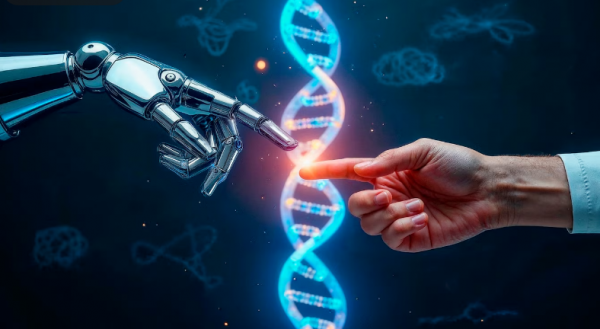
The way enterprises attract, retain, and manage talent is undergoing a quiet but fundamental transformation. As organizations navigate increasingly complex workforce dynamics, artificial intelligence is emerging as the backbone of modern human resource management systems, shifting HR from an administrative function to a strategic powerhouse.
At STL Digital, we observe that the businesses leading this shift are those that understand AI application in business not as a cost-reduction tool, but as a lever for creating more human, more intelligent, and more responsive workplaces. This evolution is not a distant projection. It is already underway across hiring pipelines, performance cycles, and employee engagement frameworks — and the organizations that act decisively today will define the talent landscape of tomorrow.
How AI is Reshaping the Hiring Process
Hiring has historically been one of the most resource-intensive functions in any organization. Between digging through stacks of resumes, juggling interview schedules, and keeping candidates in the loop over weeks of back-and-forth, it’s a process that drains time and rarely goes as smoothly as anyone would like.
AI application in business is fundamentally changing this. Intelligent screening tools can scan thousands of applications in minutes, spotting the candidates who are the right fit while picking up on patterns that hint at long-term success. AI chatbots keep the conversation going with candidates around the clock, answering questions and booking interviews so your team doesn’t have to. And with predictive analytics, you can look at the behavior, past experience, and cultural fit to find people who are more likely to stick around and thrive.
This acceleration means the competitive window for early movers is narrowing. Organizations still relying on manual-first hiring processes risk falling behind — not just in speed, but in the quality and diversity of the talent they attract.
AI and the Employee Engagement Imperative
Hiring well is only half the challenge. Keeping employees engaged, motivated, and growing within an organization creates real long-term value. AI has the ability to transform this space as well. Traditional engagement survey methods only give a brief overview of how employees are feeling; AI-enabled continuous listening technology provides real time sentiment analysis. This data allows HR teams to quickly identify and address early warning signs of employee disengagement, discover what is causing it, and intervene before their best talent leaves.
McKinsey’s research on AI in the workplace highlights that over the next three years, 92% of companies plan to increase their AI investments, with the long-term AI productivity opportunity sized at $4.4 trillion in added value from corporate use cases. For HR, that means that AI is doing much more than just automating HR functions; it is enabling entirely new types of personalized, data-driven employee experiences that couldn’t have previously been delivered at scale. AI powered tools for career path development allow the identification of an employee’s current skills, performance history, and both individual contributions and the contribution of the employee to overall company goals.
These are significant improvements. They represent a foundational shift in what employees expect from their employer — and what leading organizations are capable of delivering.
From Data Silos to Strategic Intelligence: The Role of Data Analytics
Modern HRMS platforms are breaking down data silos by unifying intelligence from recruitment to payroll. This shift enables proactive workforce planning—from predicting attrition to identifying skills gaps before they disrupt projects.
This is where the deployment of advanced Data Analytics and AI Services becomes a game-changer for the enterprise. According to Deloitte’s predictions this evolution is accelerating through the rise of AI agents. Deloitte forecasts that 25% of enterprises using GenAI will deploy AI agents in 2025, a figure expected to reach 50% by 2027. These agents move beyond simple automation to complete complex tasks autonomously, providing HR teams with valuable tools to drive productivity and improve the overall employee experience.
This intersection of technology and strategy is where organizations can finally turn vast data layers into actionable, human-centric intelligence.
Generative AI: The Next Frontier in HR Experience
Generative AI will change many aspects of HR function work, as well as how employees interact with HR systems, through automation and analytics; several examples include employee access to conversational interfaces using large language models, which make it easier for employees to use their HRMS and ask questions about their benefits concisely. It provides managers with tools to generate draft job descriptions and performance improvement plans; and HR teams can simulate different workforce scenarios to determine how an organizational change might impact the overall employee experience.
Generative AI is also changing learning and development, as it allows for various types of training to be delivered to employees based on their role, capability, and career goals, rather than offering the same training to all employees at all levels. As a result, Learning & Development is moving from a compliance activity to a means for developing capabilities and creating highly engaged employees.
Delivering higher quality and more personalized digital experiences to employees throughout their entire employment life cycle may be the single most important, long-term positive impact of generative AI on HR. Organizations that effectively leverage this capability will not only improve their ability to attract the best possible talent, but will create an environment in which that talent can thrive.
Navigating the Challenges of AI Adoption in HR
AI has a great deal of potential to improve the HR function through its application across HRMS applications but there are still challenges to be addressed before these benefits can be achieved. Data privacy and security are of particular concern for HRMS applications because they contain some of the most sensitive personal data for each individual employed by the organization. There is also a risk of algorithmic bias where an AI model, which has been trained using historical data, perpetuates bias against specific individuals in terms of their hiring or promotion. Ongoing governance frameworks and audits for bias detection are required for organizations considering using AI in human resources management.
Change management is another underappreciated challenge. A Gartner survey found that only 7% of organizations provide employees with clear guidelines on how to use the time that AI saves them. Without deliberate reskilling, cultural adaptation, and leadership alignment, even well-implemented AI tools fail to deliver their promised returns.
AI should not just be a technology project but rather an enterprise transformation project, thereby requiring sponsorship from the highest level of the organization and establishment of success metrics to track progress. Organizations must also demonstrate a commitment to implementing AI in a manner that supports the human side of the business — that is, through responsible and customer-focused implementation over time. .
STL Digital’s Role in the Intelligent HR Journey
Transforming HR processes using AI isn’t simply a case of putting the correct software in place. It also necessitates understanding the complex technology of today’s HRMS systems, the dynamic nature of the labor force, and the vital role that Human Capital Management plays in driving business performance.
AInnovTM Talent by STL Digital provides organizations with the ability to transition from instinctual hiring to precise, data-driven recruiting.With automated resume screening, role-specific interview questions, AI-based candidate evaluations, and thorough evaluation reports, hiring teams can determine the best talent candidates quicker. This results in less unconscious bias and creates a consistent, scalable method of hiring while ensuring that there is still the human touch to ensure candidates are a good fit for the organization.
The future of work is not about AI taking over for HR professionals; rather it will be about combining the strengths and abilities of both HR professionals and AI. Rather, the future workplace will be a place where AI enables HR professionals to perform those tasks that only a person can perform, such as developing trust, dealing with complexity, and creating the environment that makes it possible for individuals to do their best work.
Conclusion
The growing impact of AI application in business within HRMS is not a trend to watch — it is a transformation already unfolding across hiring processes, employee engagement strategies, and workforce planning frameworks. Organizations that move beyond experimentation and embed AI deeply within their HR operating models will gain a decisive and durable talent advantage.
At STL Digital, we are committed to helping enterprises navigate this journey with the right strategy, the right technology, and the right expertise. Because when people and intelligent systems work together effectively, the results go well beyond efficiency — they define the kind of organizations that people genuinely want to be part of.