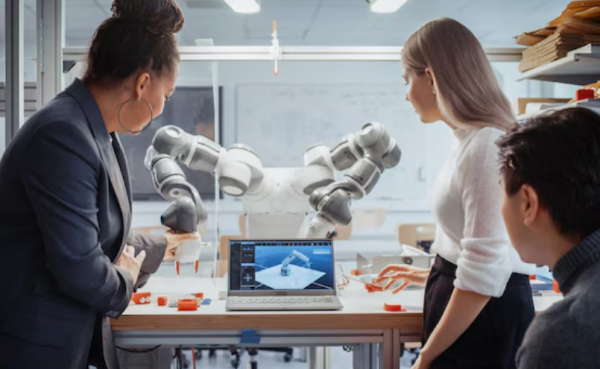
The rapid pace of technological innovation is fundamentally altering how modern organizations operate, scale, and deliver value to their customers. As we look toward the next decade, businesses across all sectors are under immense pressure to evolve their operational models, optimize resource allocation, and enhance customer experiences in competitive markets. At the core of this evolution are robust Digital Technology Services that bridge the critical gap between legacy systems and future-ready architectures.
At STL Digital we understand that navigating these modern complexities requires absolute confidence, deep technical domain expertise, and flawless engineering precision. Taking a proactive approach to infrastructure and software design ensures that an enterprise can continuously adapt to unexpected disruptions and consistently capture emerging market opportunities.
1. Integration of Agentic Artificial Intelligence
While there has been a lot of talk about generative models recently, the near-term future lies with agentic AI. Unlike other models that only react to input, an agentic AI system has the capability to think, plan, act, and repeat all steps of complicated tasks. In many companies, there has been increased use of such Artificial Intelligence Solutions that take care of complicated logistics management and even customer service.
2. The Rise of AI Supercomputing Platforms
The demand for immense computational power is transforming underlying hardware infrastructures. Businesses are moving beyond standard cloud setups to embrace AI supercomputing platforms that blend CPUs, GPUs, and specialized neuromorphic chips. According to Gartner, By 2028, over 40% of leading enterprises will have adopted hybrid computing paradigm architectures into critical business workflows, up from the current 8%. This architectural shift enables rapid simulations, massive data processing, and breakthrough innovations in fields like drug discovery.
3. Sustainable and Green Engineering Practices
Responsibility to the environment is now one of the essential tenets of modern business practices owing to regulatory pressure and customer expectations. Modern Product Engineering focuses on creating products that use efficient algorithms, sustainable hardware production, and energy-efficient software architecture designs. The engineering community is optimizing the code to ensure that it requires fewer CPU cycles and using renewable energy sources for powering server farms. All this is to make sure that technological progress does not jeopardize ecological sustainability.
4. Distributed Cloud and Edge Computing
The trend of relying on centralized data centers is being abandoned in favor of more distributed systems. Processing data close to where it originates enables edge computing to cut down on latency and reduce bandwidth expenses. With the help of scalable cloud infrastructure services, companies are able to provide instantaneous results based on real-time data from self-driving cars, smart IoT devices, and smart grid systems.
5. Advanced Confidential Computing
Data privacy continues to be one of the primary issues that need to be addressed by international companies working in multiple jurisdictions. With confidential computing, organizations protect their data not only when it is stored or transmitted, but also when the data processing takes place. Through workload isolation inside a hardware-based trusted environment, the company can share its data and collaborate without disclosing any secrets.
6. Zero Trust and Cyber-Resilience
Traditional perimeter-based security protocols are rapidly becoming obsolete in a hyper-connected world. The modern cybersecurity approach assumes that active threats exist both outside and inside the corporate network. Engineering teams are aggressively building robust Cybersecurity Frameworks grounded in zero trust architecture, which requires continuous authentication and strictly enforced access controls. This proactive resilience ensures that if a network breach occurs, lateral movement is heavily restricted.
7. Domain-Specific Language Models
While general-purpose large language models are undeniably versatile, they often lack the strict precision required for highly niche industry tasks. The enterprise market is pivoting toward domain-specific language models trained extensively on specialized proprietary data. These highly targeted Digital Technology Services offer greater contextual accuracy, better regulatory compliance, and lower operational costs. They are the ideal choice for complex legal analysis and precise financial forecasting.
8. Strategic Digital Alignment
Technology implementation must always align seamlessly with overarching corporate strategy to deliver real value. According to statista global spending on digital transformation (DX) was estimated at 2.58 trillion U.S. dollars in 2025, with this figure expected to rise to 3.88 trillion by 2028 with this reality forcing corporate boards to treat software capabilities as foundational assets. The vast amount of money invested shows that the only way for the company to survive is to modernize its processes. The Digital Transformation in Business is all about transforming the workflow, equipping the staff with user-friendly technology, and cultivating an organizational culture that focuses on constant improvement through communication.
9. Immersive Spatial Computing
Boundaries between the physical world and the digital realm are quickly fading. Spatial computing, which is mainly powered by cutting-edge augmented and virtual reality, is transforming corporate training programs, product development processes, and collaboration between remotely distributed teams. Designers can interact with complex hologram prototypes in real time, thus avoiding expensive physical prototyping and speeding up the process of delivering complex technology and consumer products to the market.
10. Technology-Led Business Model Innovation
The traditional role of the IT department has irrevocably shifted from a back-office cost center to a primary strategic revenue driver. Technology is now deeply embedded in executive-level decision-making. According to data published in Deloitte’s Tech Trends report, 64% of global organizations are actively increasing their artificial intelligence investments, while a mere 1% of technology executives report that no major structural or operational model changes are underway within their departments. This deep, data-backed operational restructuring ensures that every technical blueprint directly translates into sustainable, long-term business model innovation and marketplace disruption.
11. Comprehensive Data Fabric Architectures
With exponential growth in the number of enterprise data sources, there is now an enormous logistics problem of managing them all efficiently. Data fabric solutions offer a fully integrated architecture that links data sources together across multiple cloud platforms. With smart Data Analytics Offerings, companies are able to get an overall real-time view of themselves through highly advanced predictive business analytics.
12. Intelligent Hyperautomation
Automating single, isolated tasks is no longer sufficient for modern scale. Hyper automation technology is the integration of a number of innovative technologies, such as machine learning technology, robotic process automation technology, and intelligent business management software. Through the seamless integration of operations processes, the IT Solutions and Services have made it possible for global companies to minimize errors, reduce operational costs, and provide time for workers to think strategically.
13. Quantum Readiness and Algorithm Migration
While full-scale, fault-tolerant commercial quantum computing is still maturing, the existential threat it poses to traditional encryption methods is immediate. Forward-thinking engineering teams are already actively engaging in comprehensive quantum readiness programs. This vital process involves deeply inventorying current cryptographic assets and gradually migrating critical systems to post-quantum cryptography, ensuring absolute long-term data security against any future computational breakthroughs by malicious threat actors.
14. Composable Enterprise Architecture
unmatched agility, is the hallmark of any successful company operating in the modern era. The power of composable architecture is the ability of organizations to create software through a combination of flexible, interchangeable pieces of business functionality. This enables firms to be able to quickly adapt their software architecture by using modular building blocks that enable quick responses to sudden changes in the marketplace, regulation, and customer demand.
15. Human-Machine Skill Partnerships
The idea that machines would replace all human work has been debunked. More realistically, machines are increasingly used for intelligent augmentation. Digital engineers design intuitive user interfaces and work processes that integrate with intelligent machines that automate data processing and leave judgment, innovation, and emotional intelligence to humans.
Conclusion
Undoubtedly, the road ahead to 2030 is one marked by extreme technological complexity but also strategic opportunity unlike any other. Whether through the quick uptake of agents-based AI and supercomputing hybrid systems, or the absolutely necessary incorporation of sustainable engineering practices, there can be little doubt that the global business environment in the next fifteen years will become increasingly fast-paced, intelligent, and robust. Taking on such revolutionary developments will call for much more than software changes; it will necessitate business innovation.
Organizations that fail to modernize their core systems risk severe market obsolescence, while those that proactively leverage cutting-edge Digital Technology Services will undeniably define the successful future of their respective industries. Navigating this transformative era requires experienced technical guidance and flawless execution. By closely collaborating with proven industry leaders like STL Digital, forward-thinking enterprises can absolutely ensure their digital infrastructure is prepared for the complex challenges of tomorrow.