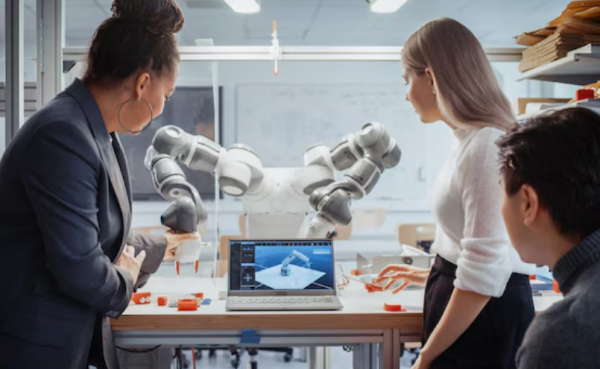
The rise of Artificial Intelligence is fundamentally transforming how organizations operate, compete, and innovate. As AI becomes increasingly embedded across business functions, companies must rethink traditional workforce models and develop strategies that align people, processes, and technology. The growing adoption of intelligent systems is creating new opportunities for efficiency, productivity, and innovation while also changing the skills and capabilities required from employees.
Organizations pursuing a successful Digital Transformation Strategy increasingly rely on expert IT Consulting and Digital Advisory Services providers such as STL Digital to help navigate workforce transformation, build AI-ready capabilities, and maximize the value of AI for Enterprise initiatives. In the AI era, workforce success is no longer defined solely by technical skills but by an organization’s ability to continuously adapt, learn, and collaborate effectively with intelligent technologies.
The Workforce Transformation Imperative
AI is changing the nature of work at an unprecedented pace. Routine and repetitive tasks are increasingly being automated, while employees are expected to focus on higher-value activities such as strategic thinking, creativity, innovation, and customer engagement.
This shift requires organizations to redesign workforce strategies around new skill requirements, evolving job roles, and emerging technologies. Businesses that fail to prepare their workforce for these changes risk losing productivity, competitiveness, and top talent.
A modern workforce strategy must focus on enabling employees to work effectively alongside AI rather than viewing technology as a replacement for human capabilities.
Why Workforce Strategies Must Evolve
Traditional workforce planning was often based on predictable business models and stable job functions. However, AI is creating an environment where roles evolve rapidly and new skill requirements emerge continuously.
Organizations must address several key challenges:
- Growing demand for AI and data skills
- Rapid technological change
- Talent shortages in emerging fields
- Employee concerns about job security
- The need for continuous learning
- Increased competition for skilled professionals
A proactive Digital Transformation Strategy helps organizations anticipate these challenges and prepare their workforce for future demands.
AI Is Reshaping Talent Requirements
The adoption of AI for Enterprise technologies is creating demand for a diverse range of capabilities, including:
Technical Skills
Organizations require expertise in artificial intelligence, machine learning, data analytics, automation, cybersecurity, cloud computing, and software engineering.
Human-Centric Skills
As AI automates repetitive tasks, uniquely human capabilities become increasingly valuable. Critical thinking, creativity, emotional intelligence, communication, adaptability, and problem-solving are essential for success.
Digital Literacy
Employees across all functions must develop a basic understanding of AI technologies and how they impact business operations.
This combination of technical and human skills forms the foundation of an AI-ready workforce.
Gartner Highlights the Risks of Poor Workforce Preparation
Recent research demonstrates why workforce enablement should be a strategic priority.
According to Gartner, by 2027, half of enterprises that lack a comprehensive people-centric AI strategy will lose their top AI talent to competitors that prioritize workforce enablement over basic AI adoption. The Gartner Global Labor Market Survey, conducted during the first quarter of 2026, gathered insights from 12,004 employees and managers across 40 countries regarding AI’s impact on work, workforce readiness, and employee sentiment. Additionally, Gartner’s survey of 197 C-suite executives and senior business leaders found that only 27% have a comprehensive AI strategy in place, while just 20% believe their workforce is genuinely AI-ready.
These findings highlight a critical reality: successful AI implementation depends not only on technology investments but also on workforce readiness, leadership alignment, and strategic planning.
The Growing Importance of Reskilling and Upskilling
As AI adoption accelerates, organizations are investing heavily in workforce development initiatives.
According to Statista, 77% of businesses in 2025 identified reskilling and upskilling employees to work alongside AI as their top workforce strategy. Additionally, 69% focused on hiring employees with AI-related skills, while 62% sought talent capable of integrating AI into everyday business operations.
These statistics demonstrate that organizations recognize workforce development as a critical component of AI success.
Effective reskilling programs help employees:
- Adapt to changing job requirements
- Increase productivity
- Enhance career growth opportunities
- Improve confidence in using AI tools
- Contribute more effectively to digital transformation initiatives
Organizations that prioritize learning and development create a stronger foundation for sustainable AI adoption.
Building an AI-Ready Workforce
Creating an AI-ready workforce requires more than occasional training programs. It demands a comprehensive strategy that integrates talent development into the broader business vision.
Establish Clear AI Objectives
Organizations should define how AI supports business goals and communicate those objectives clearly across the workforce.
Invest in Continuous Learning
AI technologies evolve rapidly, making ongoing education essential. Employees need regular opportunities to update their skills and knowledge.
Foster Cross-Functional Collaboration
Successful AI initiatives often require collaboration between business leaders, data teams, HR departments, and technology specialists.
Develop Leadership Capabilities
Leaders must understand both the opportunities and challenges associated with AI. Strong leadership is essential for guiding workforce transformation.
Many organizations engage IT Consulting experts to design scalable workforce transformation programs that align with long-term business objectives.
Redefining Workforce Metrics
Traditional workforce metrics often focus on productivity, efficiency, and headcount. However, AI-driven organizations require more sophisticated measurements.
Key workforce metrics may include:
- AI adoption rates
- Employee skill development progress
- Innovation contributions
- Workforce adaptability
- Collaboration effectiveness
- Customer impact
As Gartner’s research suggests, measuring success solely by time saved can overlook the broader value that AI creates within organizations.
Businesses should focus on outcomes such as improved decision-making, enhanced customer experiences, and accelerated innovation.
The Role of Culture in AI Transformation
Technology alone cannot drive workforce transformation. Organizational culture plays a critical role in determining AI success.
A strong AI culture encourages:
Experimentation
Employees should feel empowered to explore new technologies and approaches.
Learning
Continuous learning should become part of everyday work rather than an occasional activity.
Transparency
Clear communication helps reduce uncertainty and build trust around AI initiatives.
Inclusion
Employees should be actively involved in shaping AI adoption strategies and understanding how AI will affect their roles.
Organizations that create supportive and inclusive cultures are more likely to achieve successful workforce transformation outcomes.
The Strategic Value of Digital Advisory Services
Many organizations struggle to balance technology investments with workforce readiness initiatives. This challenge often requires specialized expertise.
Digital Advisory Services help organizations:
- Assess workforce readiness
- Identify skills gaps
- Develop AI transformation roadmaps
- Design reskilling programs
- Establish governance frameworks
- Align workforce strategies with business objectives
These services enable businesses to accelerate transformation while minimizing disruption and risk.
Preparing for the Future of Work
The future workplace will be characterized by increasing collaboration between humans and intelligent systems. Employees will use AI to augment decision-making, automate repetitive processes, and unlock new opportunities for innovation.
Organizations that proactively redesign workforce strategies today will be better prepared to compete in tomorrow’s digital economy. Building AI-ready talent, fostering continuous learning, and embracing a people-centric approach will become critical sources of competitive advantage.
Businesses that invest in workforce transformation as part of a broader Digital Transformation Strategy will be more resilient, innovative, and capable of adapting to future technological advancements.
Conclusion
As AI continues to reshape industries, organizations must move beyond technology adoption and focus on workforce transformation as a strategic priority. Research from Gartner highlights the risks of neglecting people-centric AI strategies, while Statista data shows that reskilling and upskilling have become top priorities for businesses worldwide. Success in the AI era requires organizations to combine AI for Enterprise initiatives with strong leadership, continuous learning programs, workforce enablement, and a clear Digital Transformation Strategy. By leveraging expert IT Consulting and Digital Advisory Services, businesses can build agile, future-ready workforces capable of thriving in an increasingly AI-driven world. Partnering with industry leaders such as STL Digital can help organizations successfully navigate workforce transformation, unlock employee potential, and accelerate sustainable digital growth.